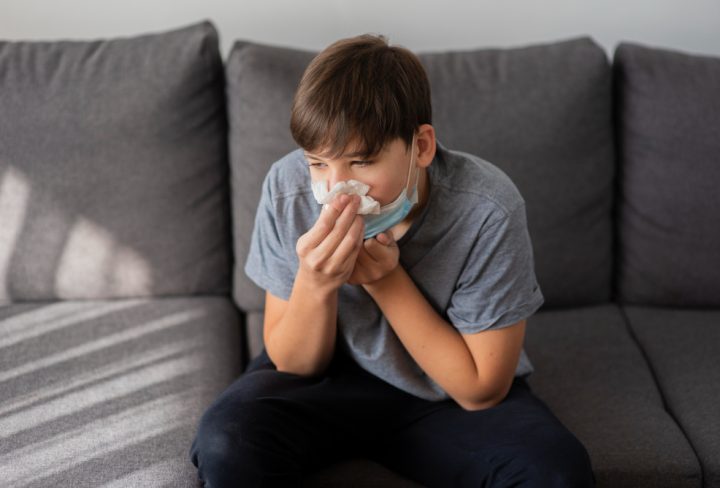
What is the Flu in Children?
The flu in children is a common illness caused by the influenza virus. It spreads easily, especially during flu season in the US. Children can get sick quickly, and the flu can make them feel very tired. Although most children recover, some may need extra care. Because the flu can lead to serious problems, parents should know the signs and how to help.
Common Symptoms of Flu in Children
Children with the flu often show symptoms suddenly. For example, they may feel fine in the morning but get sick by afternoon. Watch for these signs:
However, not all children have every symptom. Some may only have a few.
Causes and How Flu Spreads Among Children
The flu in children is caused by the influenza virus. It spreads easily from person to person. For instance, when a child coughs or sneezes, tiny droplets can carry the virus through the air. Other children may breathe in these droplets and get sick.
Additionally, the virus can live on surfaces like toys or doorknobs. If a child touches these and then touches their mouth, nose, or eyes, they can catch the flu. Crowded places, such as schools or daycare centers, make it easier for the flu to spread.
Diagnosis: How Doctors Identify Flu in Children
Doctors usually diagnose flu in children by looking at their symptoms. Sometimes, they may ask about recent contact with others who have the flu. In some cases, doctors use a quick test by swabbing the child’s nose or throat. This test can show if the influenza virus is present. However, not all children need this test. Often, the doctor can tell by the symptoms alone.
Treatment Options for Children with Flu
Treatment for flu in children focuses on easing symptoms and helping the body fight the virus. Most children get better at home with rest and fluids. However, some may need medicine. Doctors may prescribe antiviral drugs if the child is very sick or at high risk for problems. These medicines work best when started early, usually within two days of symptoms.
It is important not to give aspirin to children with the flu, as it can cause serious side effects. Instead, use acetaminophen or ibuprofen for fever and pain, but only as directed by your doctor.
Home Care and Lifestyle Tips
There are many ways to help your child feel better at home. For example, you can:
Additionally, make sure your child washes their hands often. This helps prevent spreading the virus to others.
Prevention: How to Protect Children from the Flu
Preventing flu in children is very important. The best way is to get a yearly flu vaccine. The CDC recommends that everyone over six months old get the flu shot each year. Besides vaccination, you can help protect your child by:
These steps lower the risk of flu in children and help keep families healthy.
When to See a Doctor
Most children recover from the flu without problems. However, you should call your doctor if your child:
Early care can prevent serious problems. If you are unsure, it is always better to ask your doctor.
If your child shows flu symptoms, consult your pediatrician for personalized advice and care.