What Are Ear Infections in Children?
Ear infections in children are very common. In fact, many kids will have at least one ear infection before they turn three. An ear infection happens when germs, like bacteria or viruses, get inside the ear and cause swelling or fluid buildup. Usually, the middle ear is the part affected. This area sits just behind the eardrum. Because children’s ears are still growing, they can get infections more easily than adults. For this reason, parents and caregivers should know the signs and causes of ear infections in children.
Common Causes of Ear Infections in Children
Many things can lead to pediatric ear infection causes. The most common type is a middle ear infection, also called otitis media. This happens when the tube that connects the ear to the back of the throat (called the Eustachian tube) gets blocked. As a result, fluid builds up and germs can grow. Here are some main causes and risk factors for ear infections in kids:
Symptoms of Ear Infections in Children
It is important to know the ear infection symptoms in children. Sometimes, children cannot say what hurts. However, you can look for these signs to help recognize ear infections:
For example, if your child is tugging at their ear and has a fever, an ear infection may be the cause. Always watch for changes in mood or eating, as these can also be signs.
When to See a Doctor for Ear Infections
Sometimes, ear infections get better on their own. However, there are times when you should see a doctor. If your child has a high fever, severe ear pain, or fluid coming from the ear, seek medical help. Additionally, if symptoms last more than two days or get worse, call your doctor. For babies under six months with any ear infection symptoms, see a doctor right away. If your child has trouble hearing or balance problems, it is also important to get checked. Early care can help prevent problems later.
Diagnosis and Treatment Options
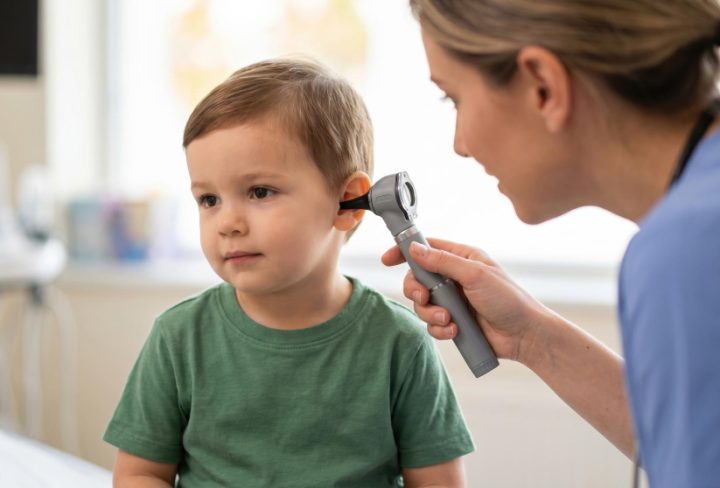
Doctors diagnose ear infections in children by looking inside the ear with a special light. This tool helps them see if the eardrum is red or has fluid behind it. Sometimes, doctors may use a small device to check for fluid movement. For pediatric ear infection treatment, the doctor may suggest pain relievers, like acetaminophen or ibuprofen. In some cases, antibiotics are needed, especially if the infection is caused by bacteria. However, not all ear infections need antibiotics. Home care, such as warm compresses and rest, can also help. Always follow your doctor’s advice when treating ear infections in children.
Preventing Ear Infections in Children
There are steps you can take for preventing ear infections in kids and supporting child ear health. While not all infections can be avoided, these tips may help:
By following these steps, you can help protect your child’s ear health and lower their risk of ear infections.